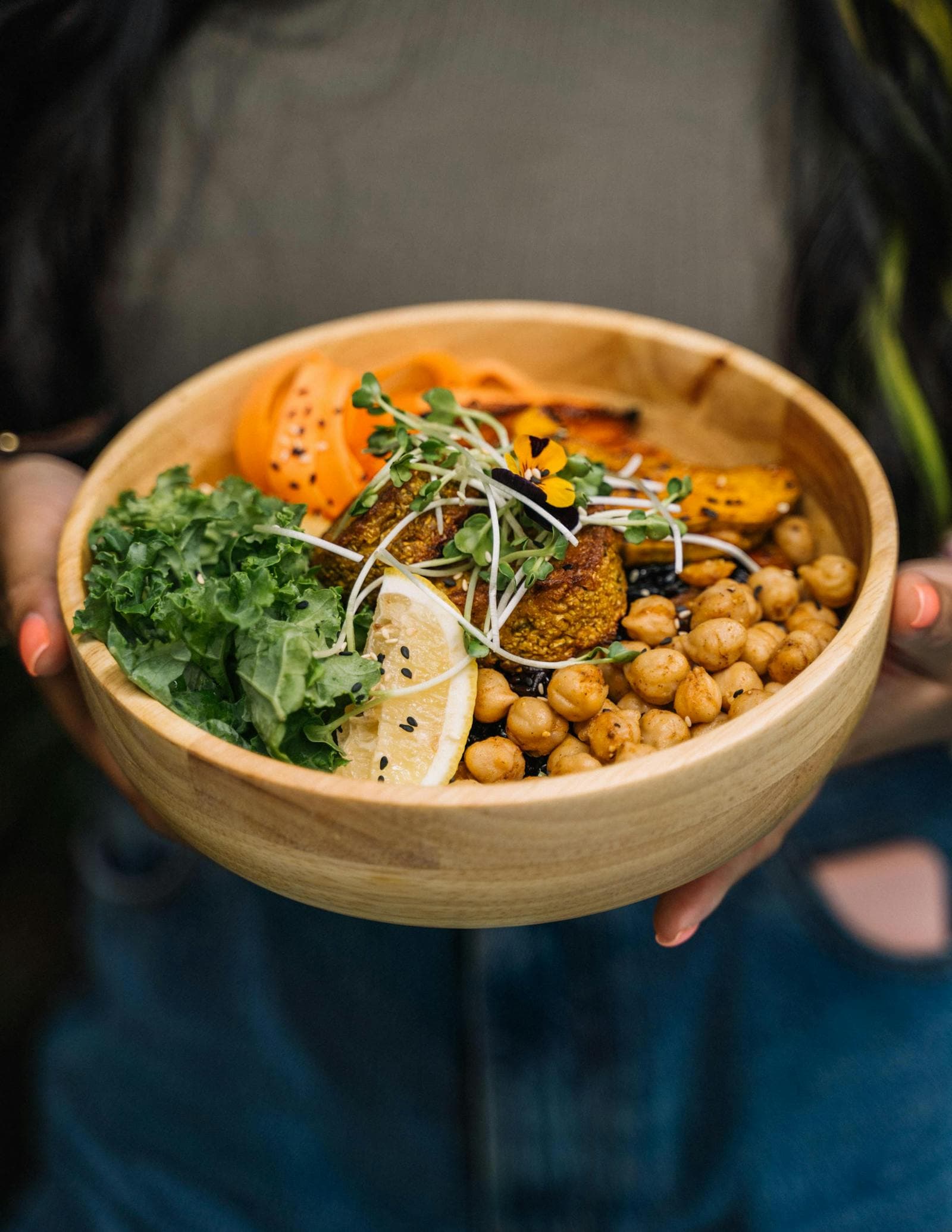
Vegetarian Anti-Inflammatory Meal Plan
7
Days
4
Meals / day
1900
Calories / day
Easy
Difficulty
Vegetarian eating and anti-inflammatory eating overlap heavily — both prioritize fiber, polyphenols, and minimally processed plants. The challenge isn't whether you can do it without meat, it's hitting protein targets and getting enough omega-3s. This plan handles both with intention.
Plant-based eating and anti-inflammatory eating share most of their DNA. Both prioritize fiber, polyphenols, healthy fats, and minimally processed whole foods. Both reduce reliance on industrial meat and ultra-processed everything. Combining them gives you the strongest possible combination for inflammation reduction without animal protein.
The two real challenges are protein and omega-3s. Most vegetarians eat enough protein on paper, but it's spread inefficiently across the day, leaving recovery and satiety lower than they should be. This plan front-loads protein at breakfast (eggs, Greek yogurt, cottage cheese) so you're not playing catch-up by dinner. Omega-3s require deliberate planning: ground flax or chia daily, walnuts in rotation, and ideally an algae-based EPA/DHA supplement since plant ALA conversion is inefficient.
This plan includes dairy and eggs (lacto-ovo vegetarian). For full vegan, see the modifications section below — most days swap with a single ingredient change. The plan covers 7 days of meals that aren't heavily reliant on tofu and tempeh (those are options, not crutches), instead leaning on legumes, eggs, and a wider variety of vegetables.
Educational content. Not medical advice.
Information on this page is for educational purposes only. It is not a substitute for professional medical advice, diagnosis, or treatment. Consult your healthcare provider before changing your diet, especially if you have a medical condition, take medications, or are pregnant or breastfeeding. Read the full disclaimer.
What this plan looks like by the numbers
Macro distribution and calorie split per meal across an average day on the plan.
Macro breakdown
20%
55%
25%
Calories by meal
Who this is for
Vegetarians (with or without dairy/eggs), or omnivores curious about a plant-based week. The plan includes eggs and dairy. For full vegan, see the modifications section.
What to expect
- Faster gut transit and better stool quality (more fiber than the typical American intake)
- Lower cholesterol markers within 4-6 weeks
- Stable energy from balanced macros across the day
- More cooking variety than expected — plant-based done well isn't bland
Build your own plan in the app
Scan any meal, see its inflammation score, and swap in better picks as you go.


The 7-day plan
Click any meal to see the full recipe with ingredients and instructions.
Day 1
Breakfast · Lunch · Dinner · Snack
Day 2
Breakfast · Lunch · Dinner · Snack
Day 3
Breakfast · Lunch · Dinner · Snack
Day 4
Breakfast · Lunch · Dinner · Snack
Day 5
Breakfast · Lunch · Dinner · Snack
Day 6
Breakfast · Lunch · Dinner · Snack
Day 7
Breakfast · Lunch · Dinner · Snack
Why this plan works
Plant-only protein sources (lentils, chickpeas, beans, tempeh, tofu) come bundled with fiber and polyphenols, unlike meat which is a pure protein delivery. That bundling is why vegetarian patterns produce stronger fiber-driven gut effects than mixed diets even at the same calorie intake.
The science
Vegetarian diets reduce CRP by 20-30% compared to omnivorous diets in head-to-head trials, primarily through higher fiber intake. The Adventist Health Study-2 (75,000+ participants) showed vegetarians have 30-50% lower rates of inflammatory diseases (heart disease, type 2 diabetes, certain cancers). Vegan diets show similar or stronger effects. Bottom line: more plants = less inflammation, with very strong epidemiological backing.
What happens week by week
A realistic timeline of changes you can expect if you stay consistent.
Fiber adjustment
Going from typical American fiber intake (~15g/day) to vegetarian (~35-40g/day) takes some gas adjustment. Drink lots of water; it passes by week 2.
Microbiome shift
Gut bacteria diversity measurably increases on plant-heavy eating. Stool quality improves. Some people notice clearer skin around now.
Energy stabilization
Without meat's heavier digestion, post-meal energy crashes are less common. Workouts feel snappier.
Long-term adaptation
B12 and omega-3 levels need ongoing attention via supplements or fortified foods. Iron and zinc usually self-correct with varied legume intake.
5 mistakes to avoid
The shortcuts that quietly break the plan, plus how to fix them.
Replacing meat with cheese
Fix: Most vegetarians end up overdoing dairy. Quality fermented dairy (yogurt, kefir, aged cheese) is fine; processed cheese is not. Use plant proteins instead.
Eating refined-carb 'vegetarian' meals (pasta, pizza, bread)
Fix: Vegetarian junk food is still junk food. The benefits come from whole foods, not from removing meat alone.
Ignoring B12
Fix: B12 isn't in plants. Either supplement weekly (1000mcg) or eat fortified foods deliberately. Deficiency builds slowly and ruins energy levels.
Not getting enough omega-3
Fix: Plant ALA omega-3 (flax, chia, walnuts) converts to EPA/DHA at only ~5% efficiency. Add an algae-based EPA/DHA supplement.
Missing protein at breakfast
Fix: Eggs, Greek yogurt, cottage cheese, or a tofu scramble at breakfast prevents the protein deficit that builds across the day.
How this compares to other diets
If you're choosing between approaches, here's the honest difference.
Diet
Vegan
Similar to
Almost identical principles.
Different
Vegan removes eggs and dairy entirely. Slightly harder to hit B12 and complete protein without planning.
Diet
Pescatarian
Similar to
Both heavily plant-based.
Different
Pescatarian includes fish, which makes omega-3 trivial. Vegetarian requires more deliberate omega-3 planning.
Diet
Flexitarian
Similar to
Both lean plant-heavy.
Different
Flexitarian eats meat occasionally (1-3x/week). Vegetarian doesn't. Flexitarian is easier to maintain socially.
Modifications
- •Vegan: swap eggs for tofu scramble, yogurt for coconut yogurt, dairy cheese for cashew cheese in the lasagna
- •Higher protein: add 1-2 tablespoons of hemp seeds or pea protein powder to morning oats and smoothies
- •Flexitarian: include 2 fish meals across the week to ensure marine omega-3 intake
Pro tips
- →Add a tablespoon of ground flaxseed daily for ALA omega-3s
- →Consider an algae-derived omega-3 supplement (EPA/DHA) since plant ALA conversion to EPA/DHA is poor
- →B12 isn't in plants — supplement weekly if you're fully vegetarian or vegan
Frequently asked
Can I get enough protein without meat?
Yes. Lentils, chickpeas, beans, tofu, tempeh, eggs, Greek yogurt, and cottage cheese are all 15-25g protein per typical serving. Hitting 80-100g/day on a vegetarian diet is straightforward.
Will I miss meat?
Most people don't, especially when the meals are flavorful. The trick is using bold seasonings (cumin, smoked paprika, garlic, lemon) so plant-based meals feel substantial.
Scan a food in 2 seconds. Know if it's healing or hurting you.
Point your camera at any meal, ingredient, or label. Get an instant inflammation score, the science behind it, and better alternatives. All free.
